Alaska presents some of the most demanding conditions for landslide hazard assessment in North America. Steep terrain, active glacial and periglacial processes, and infrastructure operating in remote environments create risk profiles that require rigorous numerical modeling and defensible engineering analysis.
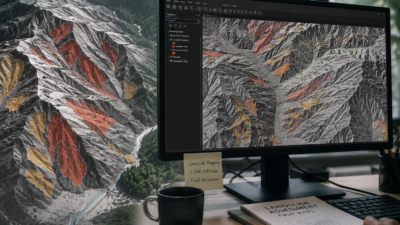
During my time at Shannon and Wilson I led two formal landslide runout studies in Alaska, each requiring parametric sensitivity analysis, calibration, and numerical simulation using RAMMS engineering software.
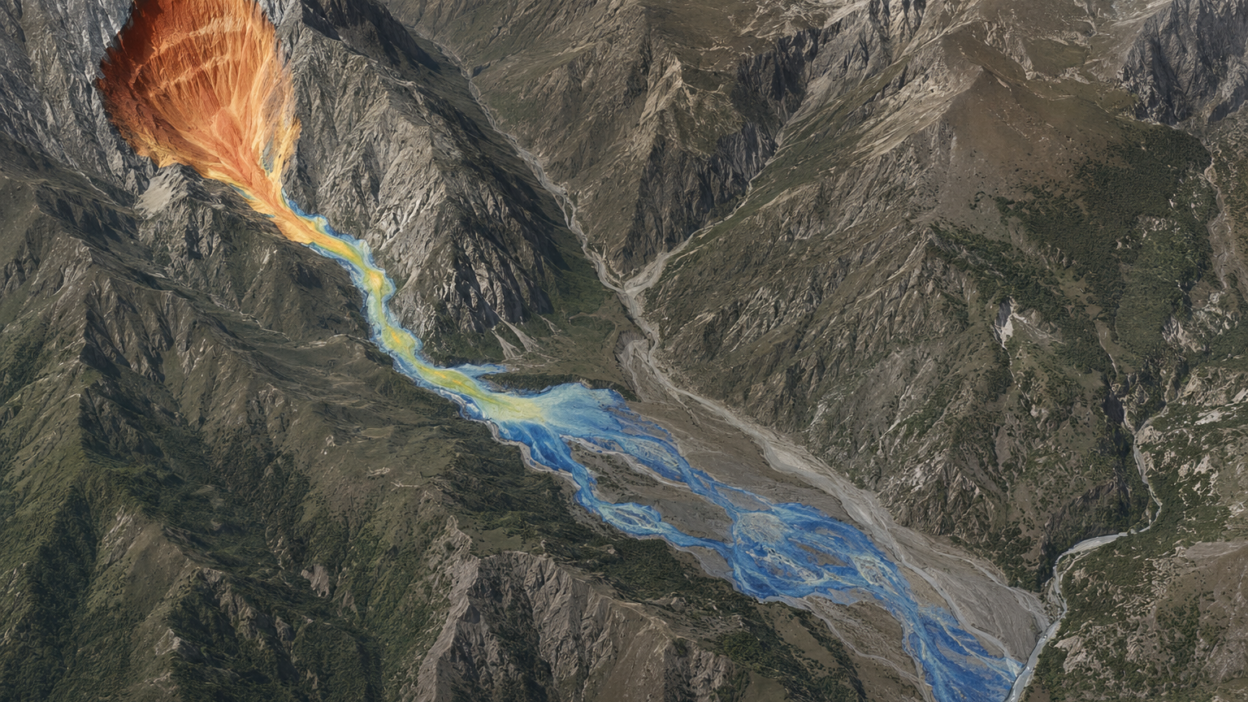
The first was a geohazard assessment for a regulated energy infrastructure client at a critical stream crossing. The study required modeling a complex sequence of landslide dam breach scenarios and long-runout flood flows, deriving engineering design parameters for physical infrastructure protection, and delivering a formal geotechnical report with associated GIS files of numerical simulation results.
The second was a formal debris flow hazard and risk analysis for public facilities operated by the City and Borough of Sitka. This was the first implementation of debris flow runout numerical simulation and risk analysis for municipal government schools in Alaska. The study required managing a technically complex scope under significant stakeholder pressure and delivering a defensible, rigorous analysis that could support public facility siting and safety planning decisions.
Both projects required the same core discipline: producing technically sound numerical modeling under real-world delivery constraints, for clients where the consequences of error were physical and consequential.